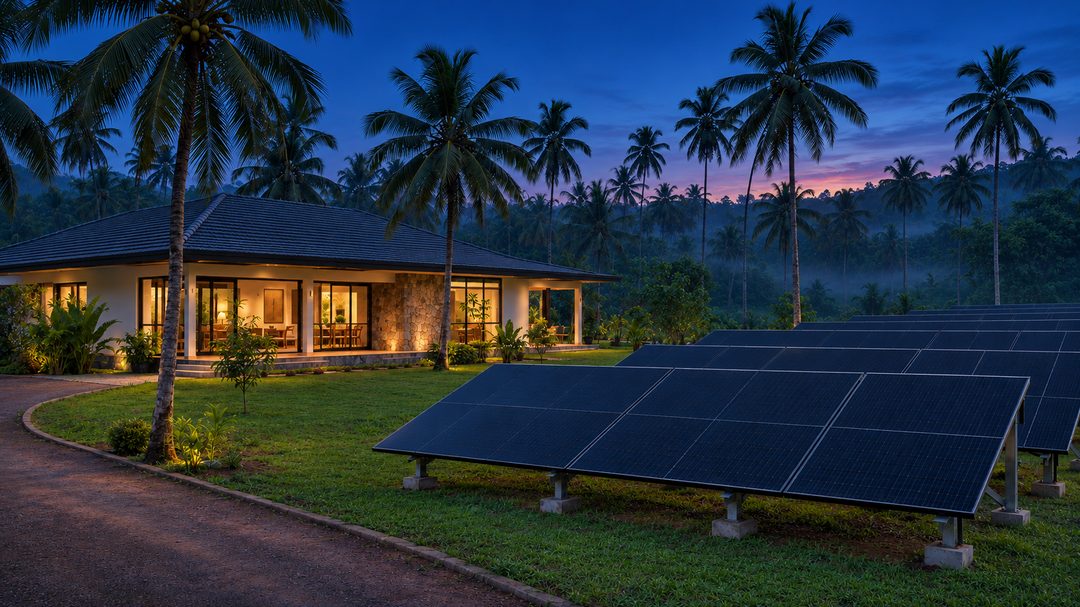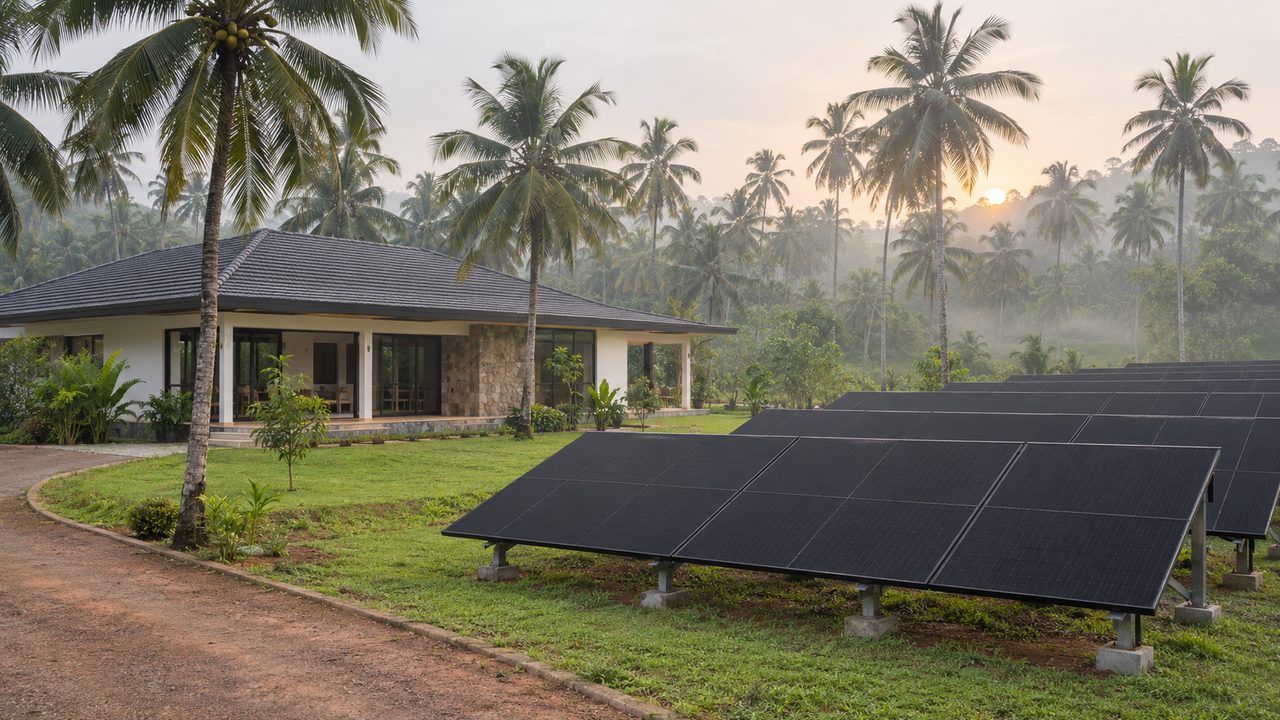
10kW Solar System Price in Sri Lanka: Off-Grid, with Batteries
This 10kW package is off-grid, with batteries, for three-phase homes. Batteries store power for the night. See the 10kW solar system price in Sri Lanka by battery bank. One installer’s price list shows this size from about Rs 2.8 million.
Or send your load list on WhatsApp: +94 77 302 8992
10kW solar system price in Sri Lanka by battery bank
The panels and inverter are the same in every row. Only the battery bank changes.
| Battery bank | Battery size in units (before reserve) | Usable units a month (about) | Starting price (one installer’s published list) |
|---|---|---|---|
| 16.08 kWh | 16 units | 450-1,200 | From about Rs 2.8 million |
| 32.15 kWh | 32 units | 450-1,200 | From about Rs 3.6 million |
| 48.23 kWh | 48 units | 450-1,200 | From about Rs 4.4 million |
Last reviewed November 2026 by Abdul Rahman. Source: a Sri Lankan installer’s published off-grid price list, October 2026.
Partner kits may use other panel counts or brands. [CONFIRM: partner 10kW kits match this spec, yes or no, and their price]
Part of these units comes straight from the panels in the day. The battery bank covers the night. The price list gives the same units range for all three banks. It says its units are a guide, based on normal home use.
A bigger bank keeps more power in store for long nights. With the 16.08 kWh bank, the top of the range means using most power in the daytime. That bank stores about 16 units for the night, a bit less after the reserve.
- Use most of your power at night? Pick the 32.15 or 48.23 kWh bank.
- Looking at the 10kW solar battery price? Each row is the full 10kW kit with that battery bank, so a bigger bank starts higher. The smallest bank here is 16.08 kWh.
10kW is the inverter size. Batteries come in kWh sizes.
Want a battery bank on its own? Ask in your quote request.
These are guide prices, not a fixed offer, and prices can change. Your installer sets the final price after a site visit and inspection. [CONFIRM: the site visit is free, yes or no]
What changes the final price:
- Battery bank. A bigger bank costs more, as the table shows.
- Roof or frame. Roof type and height, or a ground frame, change the fitting work.
- Cable runs. A long run to your main board needs more cable. Underground cabling isn’t in the published prices.
- Northern Province. The price list says sites there may cost more.
Some 10kW solar system price lists in Sri Lanka show on-grid kits with no battery. Those cost less, but they switch off in a power cut. The prices above are for off-grid kits with batteries.
What the 10kW off-grid package includes
The price list names three main parts.
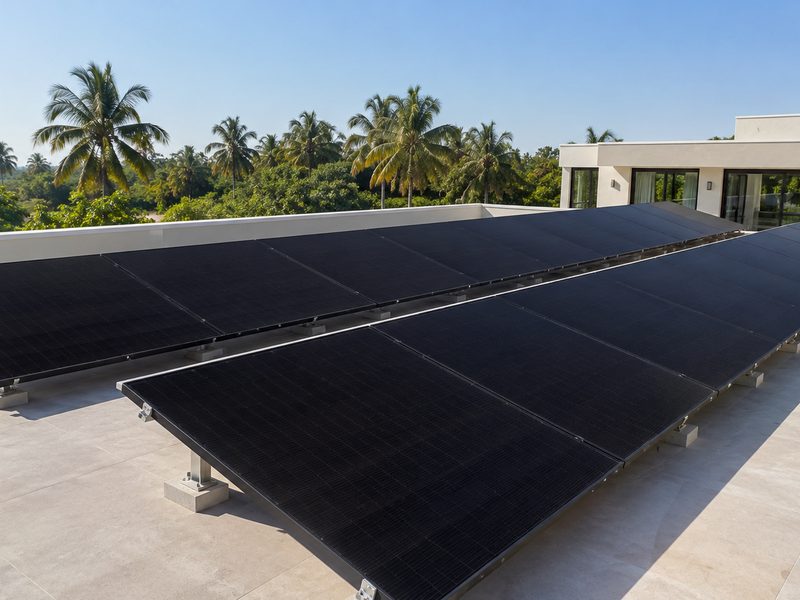
16 solar panels, 620W each, N-type
Its job: Turn sunlight into DC power
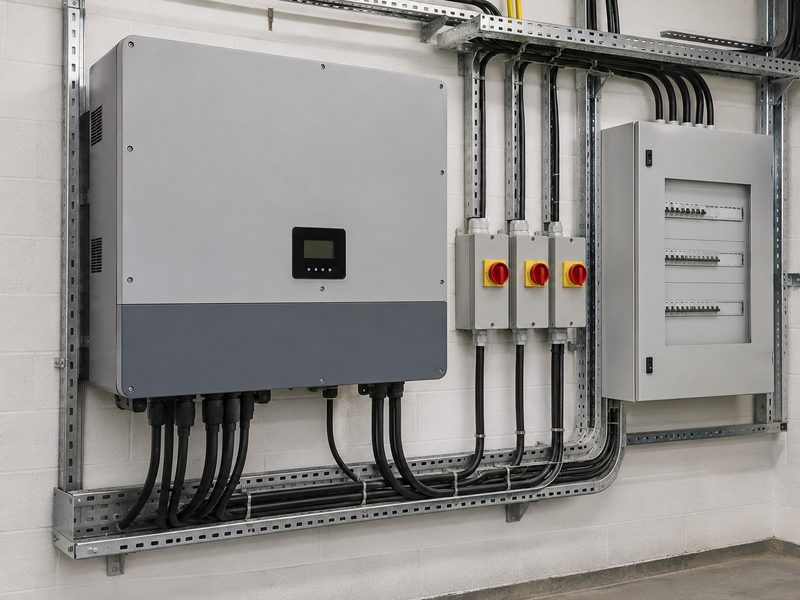
10kW hybrid-ready inverter, three-phase, set up for off-grid mode
Its job: Turns panel and battery power into AC for your three-phase board. Its built-in charge controller charges the batteries.
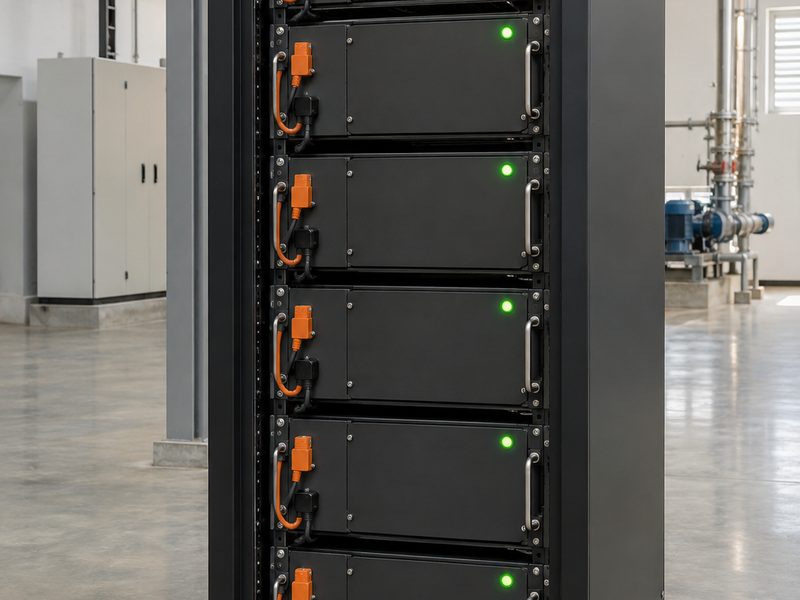
Battery bank, 16.08, 32.15 or 48.23 kWh
Its job: Stores the day’s power for the night


Ask which battery type the kit uses: lithium (LiFePO4) or lead-acid. [CONFIRM: battery type in partner kits]
A safe system also needs the fitting parts below. The price list doesn’t name them.
Ask for these in your written quote: Mounting: roof rails and clamps
Its job: Hold the panels on your roof
Ask for these in your written quote: Wiring: DC solar cable and AC power cable
Its job: Join the panels, inverter, batteries and your main board
Ask for these in your written quote: Breakers: DC and AC breakers and isolators
Its job: Cut the power for a fault or a repair
Ask for these in your written quote: Earthing for the panels and inverter
Its job: Takes fault current into the ground
Ask for these in your written quote: Surge protection: DC and AC surge protectors
Its job: Protect the inverter from lightning surges
[CONFIRM: what partner packages include: mounting, wiring, breakers, earthing and surge protection, yes or no for each]
[CONFIRM: panel, inverter and battery brands in partner packages]
[CONFIRM: who supplies the kit, the partner installer or the site]
Specs, roof space and three-phase supply
- Spec: Inverter output
- Listed 10kW kit: 10kW, three-phase supply
- Spec: Total solar power
- Listed 10kW kit: 9.92 kWp
- Spec: Roof space
- Listed 10kW kit: About 640 sq ft
640 sq ft is about a 25 ft by 25 ft area. Pick a part of the roof with no shade from trees or walls.
The listed 10kW set gives three-phase power. Not sure if your home is three-phase? Check your meter or ask your installer before you pick it.
Each kW of panels makes about 115-120 units a month in Sri Lanka. So the listed 9.92 kWp kit makes about 1,140-1,190 units a month.
In off-grid mode, you can’t sell spare power. The price list gives about 450-1,200 usable units a month, as a guide. So its top figure is about all the kit makes.
What can a 10kW off-grid system run?
It runs a big home or a small business: lights, fans, fridges, a washing machine and ACs. The inverter gives up to 10kW at one time. As a guide, we work out about 15-40 units a day from the list’s monthly range. The battery bank sets how much runs at night.
Check two numbers before you pick a 10kW package:
- Watts at one time.Add up the watts on each appliance label. Keep the total running together under 10,000 watts. Fridges, ACs and other motors pull extra power for a moment when they start. Ask your installer to check those.
- Units at night.One kWh of battery stores one unit on your bill. A full 16.08 kWh bank holds about 16 units.
A three-phase inverter feeds the three phases in your board. Each phase takes only part of the 10kW. Ask your installer how much each phase can take, and how to spread big loads, like ACs.
- Have a grid bill? Use the monthly units on it.
- No grid line? List your appliances. Add the daily hours for each one. Send that list with your quote request.
- Want to test your numbers first? Run them through the off-grid solar calculator. It has a three-phase setting for homes like yours.
Off-grid mode or hybrid mode
The listed 10kW set uses a hybrid-ready inverter. The price list sells it in off-grid mode.
- Off-grid mode. The panels charge the batteries in the day. The batteries run your home at night.
- Backup in off-grid mode. Panels and batteries not enough? The kit can pull power from your grid line, if you have one, or from a generator you own. It sends no power back, so there’s no net metering or export agreement.
- Hybrid mode. Many hybrid-ready inverters can send spare panel power back to the CEB or LECO grid, if they allow it. Not every model can export, so get your model’s export ability in writing. CEB or LECO must approve that connection first. [CONFIRM: can partners get grid approval for hybrid mode, and with or without export]
This kit runs on three-phase power. So a single-phase grid line or generator may not suit it as backup. Ask your installer before you buy.
In off-grid mode, ask the installer to set the kit to send no power back. Also ask if CEB or LECO needs to know about your backup line.
- No grid line today? Start in off-grid mode. If the grid reaches your land later, the kit can use it for backup. It may need a three-phase line from CEB or LECO first.
- Want to send power back then? Ask your installer about hybrid mode. [CONFIRM: partner installers can switch a hybrid-ready inverter to hybrid mode later, yes or no]
- Want the 10kW hybrid solar system price in Sri Lanka? The rows above are the listed kit in off-grid mode. Hybrid mode adds grid connection work. Ask your installer to price it in the same quote. [CONFIRM: how partners price the grid connection work for hybrid mode]
Some installers call off-grid mode with a backup line “hybrid” or “zero export”. So ask each one: does this kit send power to the grid?
Warranty and service
Ask for each warranty in writing, with the years for each part.

[HOLD: hide this table until partners confirm their warranties. Until then, show only the line above.]
Part: Solar panels
Warranty: [CONFIRM: panel product and output warranty years in partner packages]
Part: Inverter
Warranty: [CONFIRM: inverter warranty years in partner packages]
Part: Battery bank
Warranty: [CONFIRM: battery warranty years or cycles in partner packages]
Part: Install work
Warranty: [CONFIRM: installer workmanship warranty years]
- Ask who you call for service after the install. [CONFIRM: who services the system after handover, the installer or the site]
- Ask how many days the install takes and what upkeep the kit needs. [CONFIRM: usual install days and upkeep for partner 10kW kits]
Other sizes
- Do you use up to about 600 units a month? Then compare the 5kW off-grid solar system price. It runs on single-phase power and needs about 360 sq ft of roof.
- Is your home on single-phase power? Need 600-800 units a month? Ask about the 6kW off-grid set in your quote request.
- On single-phase and need more than 800 units? Ask about the single-phase 12kW set on the same list. It uses two 6kW inverters.
- Need more than about 1,200 units a month? The same list also has 15kW and 20kW three-phase sets. Ask about them in your quote request.
- Not sure 10kW is the right size? Compare the starting price of each off grid solar system on our price table, from 3kW to 10kW.
Common questions
Can a 10kW off-grid system run air conditioners?
Yes, if the ACs’ watts fit under 10kW with your other loads, and each phase can take its share. ACs at night drain the battery bank fast. For ACs at night, look at the 32.15 or 48.23 kWh bank. Ask your installer to check each AC’s starting power.
How long does the battery bank last at night?
Divide the battery size by your load. A full 16.08 kWh bank runs a 1,000-watt load for about 16 hours. Your installer keeps some charge in reserve, so plan for less. A 48.23 kWh bank lasts about three times longer.
Will the battery bank last through several cloudy days?
The panels make less power on cloudy days, so the bank can run low. The 32.15 or 48.23 kWh bank gives you more reserve. Cut big loads on those days.
Have a generator? It must suit a three-phase kit. Ask your installer to connect it for long rainy spells.
How many years do the batteries last?
Ask for the rated cycle count in writing, with the battery warranty. Battery life depends on that count and how deep you use the bank each night. [CONFIRM: rated cycles of partner batteries]
Can I start with 16.08 kWh and add batteries later?
Sometimes. Ask for a battery model with room to add packs later. The 10kW inverter runs each battery size in the table. The table prices are for the full bank at the start.
Check that a new battery works with your inverter brand. Some lithium batteries work only with certain inverter brands.
Does the price include fitting the system?
[CONFIRM: fitting, testing and handover included, yes or no] The published prices are standard project rates for a home system. Ask the installer to list mounting, wiring, breakers and labour in the quote.
Get this package price
Tell us your district and your monthly units or appliance list. We pass your request to an installer registered with SLSEA. SLSEA links its lists of registered providers from its rooftop solar scheme page, Sooriyabala Sangaramaya. [CONFIRM: Q3 and Q4 how many installers get each request, and how fast they call. Default if no answer: don’t promise “one”; no time promise. Checked: audits/14-final-review-and-questions-14Nov2026.md Q3 and Q4, not answered by 16 Nov 2026]
The installer checks your site and wiring. Ask for the final quote in writing, with every part listed.
Use the form to ask for a solar quote for a 10kW package.
This page is general information, not electrical advice. Ask a registered installer or a qualified electrician to check your wiring before any install.